
The Education Research in Conflict and Protracted Crisis (ERICC) Research Programme Consortium is a global research and learning partnership that strives to transform education policy
We've seen that improving access, quality, and continuity of education is the most effective way to support the
learning and development of children in crisis and conflict.The ERICC Helpdesk exists to provide actionable,
evidence-backed advice to maximise meaningful change through your educational programmes, policies and
partnerships.
Not only do we have local and international experts across 30 topic areas - the Helpdesk’s area of expertise is translating research into recommendations you can use. Our range of services includes evidence analysis, programme analysis, measurement and impact evaluation support, research support, and value for money analysis.


GPE, Kelley Lynch
About our services, approach, and team
Behind every response is a team of dedicated experts working together to help provide evidence-backed solutions for conflict- and crisis-affected education. Visit our About Us page to learn more about the services we offer, our roster of experts, and the partner organisations who make this support possible.
Learn moreThe Helpdesk in Numbers

currently
41
Number of requests completed

currently
13
Number of countries where we have worked

currently
1028
Days of support provided

currently
50
Number of experts available
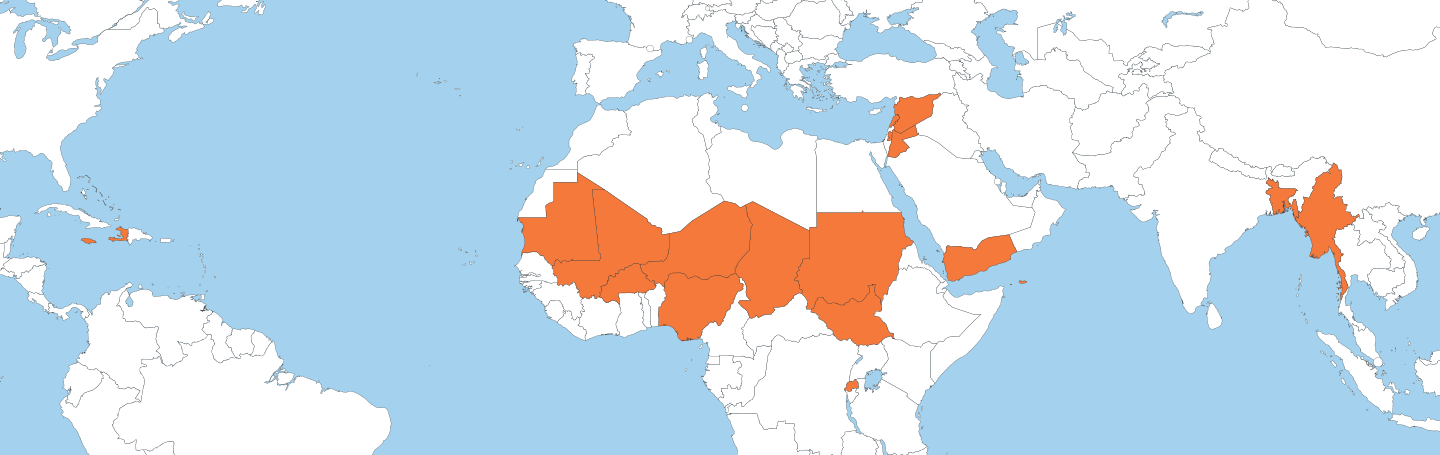
Bangladesh Caribbean* Jamaica Jordan Myanmar Nigeria Palestine Rwanda Sahel*
Syria Yemen Burkina Faso Chad Mali Mauritania Niger Lebanon Sudan South Sudan Haiti
Why Choose the Helpdesk
Evidence-based
Our experts analyse research to determine what has been proven effective for education in crisis and conflict environments and translate their findings into actionable recommendations specific to your context.
Quality-assured
Every response to Helpdesk queries are quality-assured to guarantee a reliable analysis of evidence that you can credibly use in programming and policymaking.
Improving value for money
Our cost analyses provide advice for achieving maximum impact through the most scalable and best value for money programmes. Our value-for-money services can also provide demonstrable evidence for effective use of available funding.
HELP DESK PROCESS
Query Submission
Query submission via email: enqueries@ericchelpdesk.org
Scoping Call
Helpdesk team with technical team set up a scoping call on specifications, context, timeline & expectation
Assignment Resumes
Assignment resumes - the helpdesk draws on the pool of experts to allocate to the assignment.
Confirmation
The requestor receives notification and confirmation with 24 - 48 hours
Terms of Reference
Draw up Terms of reference and brief on deliverables for request fulfilment.
Quality Assurance & Production
All deliverables are quality assured and produced for presentation to the requestor.
frequently asked questions
Create a ticket
ERICC seeks to identify the most effective approaches for improving access, quality, and continuity of education to support sustainable and coherent education
Submit Ticket
PUBLICATIONS
View AllTestimonials
“The team was so responsive, professional, and flexible. They really went above and beyond in not just the quality of the work, but their willingness to help non-experts grasp a complicated subject.”
“We have been hugely appreciative of the ERICC Helpdesk and its engagement, support, and capacity. It has been helpful not only for generating invaluable research but has also … enabled us to build relationships and garner trust from other key education stakeholders.”
“[The researchers] are comprehensive and responsive in their approach to research and engagement. The final product is hugely helpful in informing both Post and partner programmatic and policy decisions and has already been utilised to inform the design of advocacy priorities.”